How to Keep Your Home Renovation Within Budget Without Sacrificing Design Quality
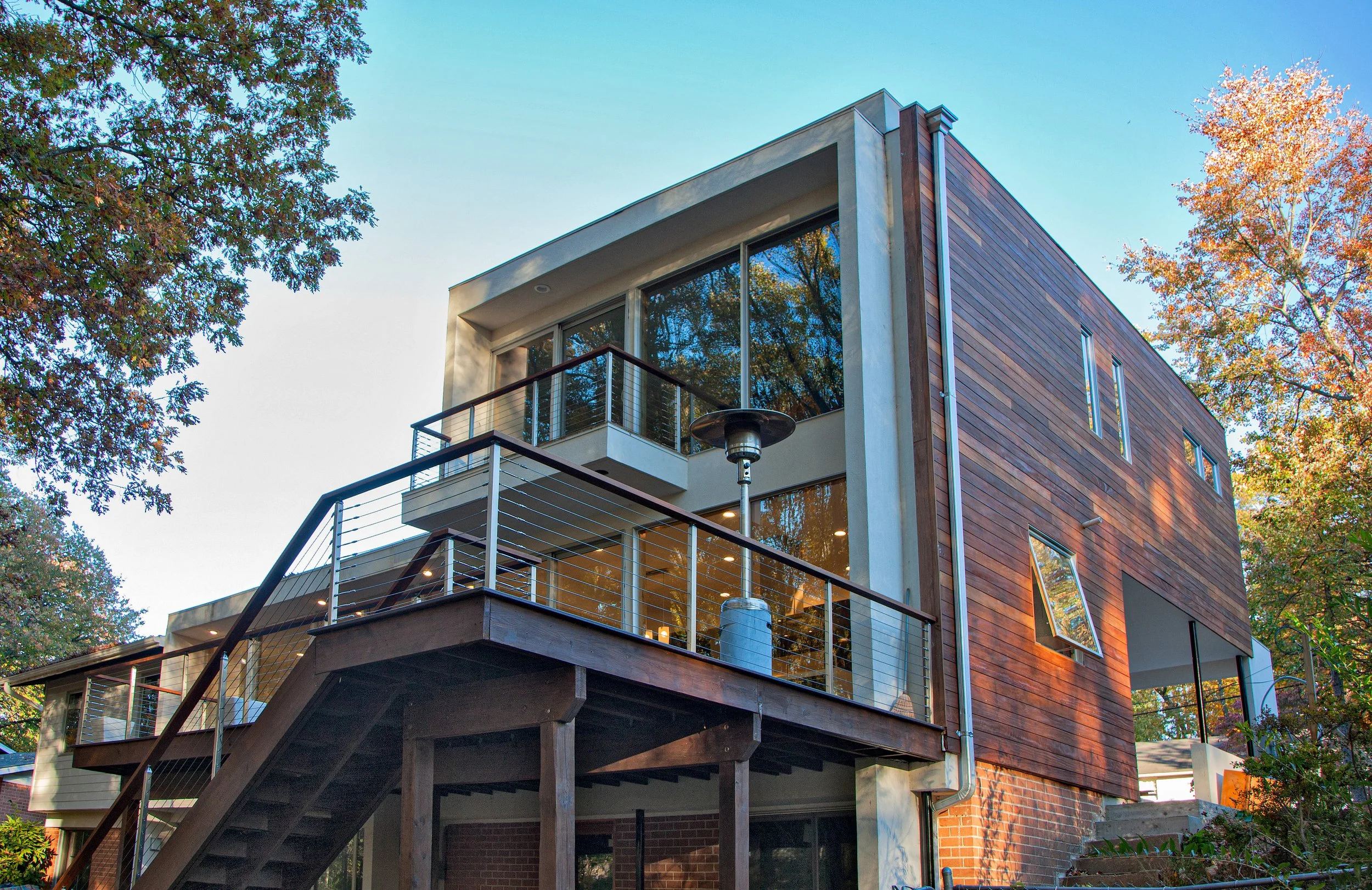
Modern home renovation with quality materials and design staying within budget in Maryland
Budget and quality feel like enemies.
You want good design. Good materials. Something that lasts.
But you also have a number you can't go over.
Here's the truth from designing hundreds of renovations in the DMV:
Budget and quality aren't enemies. Poor planning is the enemy.
The Real Budget Killers
It's not the quality materials.
It's not good design.
It's these:
Changing your mind mid-construction.
Every change order adds 20-30% markup. That "small tweak" to move a window? $3,000.
Not knowing what you're building before you start.
Vague plans = contractors guessing = surprise costs.
Designing first, pricing later.
Falling in love with a design you can't afford to build.
Skipping the details.
"We'll figure it out in the field" always costs more than figuring it out on paper.
What Actually Keeps You On Budget
1. Know Your Real Number Before You Design
Not what you wish it cost.
What you can actually spend.
Include everything:
Design fees
Construction
Permits
Contingency (15-20%)
Furnishing the new space
If your total budget is $150K and you spend $20K on design and permits, you have $130K for construction—not $150K.
Know this before you fall in love with a plan.
2. Design It Once, Build It Once
The cheapest way to renovate is to make all decisions before construction starts.
This means:
Picking your tile before framing starts (yes, really).
Knowing where outlets go before walls are closed.
Selecting light fixtures before rough electrical.
Every "we'll decide later" costs you money when later arrives.
3. Spend Where It Matters, Save Where It Doesn't
Not everything needs to be expensive.
Spend money on:
Structure and systems (this is invisible but essential)
Things you touch daily (hardware, faucets, counters)
Anything hard to change later (tile, built-ins)
Save money on:
Things you can upgrade later (lighting fixtures, some hardware)
Decorative elements (paint is cheap to change)
Wherever quality doesn't actually differ (basic electrical boxes vs. premium)
But never save by:
Using cheap materials that fail in 3 years
Skipping proper waterproofing
Cutting corners on insulation or windows
That's not budget-conscious. That's expensive twice.
4. Get Real Pricing Early
Don't design in a vacuum.
At RT Studio, we track costs from the first sketch.
Not guessing. Actual cost data from recent DMV projects.
This means you know if you're designing a $200K kitchen or a $80K kitchen—before you commit to either.
You can adjust the design before you're emotionally attached.
5. Build in Contingency, Then Don't Touch It
15-20% contingency isn't optional.
It's not:
Upgrade budget
"Let's add this while we're at it" fund
Designer handbag money
It's for:
The plumbing that needs replacing once walls are open
The subfloor that's rotted
The electrical panel that's actually unsafe
If you don't use it? Great. But you needed it available.
6. Choose a Contractor Who Prices From Real Drawings
Vague scope = vague pricing = budget disasters.
Good contractors can price accurately from good drawings.
Bad contractors low-ball from sketches, then hit you with changes.
How to tell the difference:
Good bid: Line-item breakdown, based on detailed drawings, includes allowances for specific items.
Bad bid: One lump sum, "we'll figure out details as we go," way lower than everyone else.
The low bid always costs more in the end.
7. Don't Value-Engineer Quality, Value-Engineer Scope
Budget tight?
Don't do this:
Cheaper tile (that you'll hate and replace in 5 years)
Worse windows (that leak and waste energy)
Lower-grade fixtures (that break)
Do this:
Smaller addition (300 sq ft of great vs. 400 sq ft of mediocre)
Fewer custom elements (one statement piece, not five)
Phased approach (do it right in stages vs. all at once poorly)
Quality materials in a smaller space > cheap materials everywhere.
The DMV Reality
Material costs in the DC metro area are what they are.
Labor costs in Montgomery County, Fairfax, Arlington—they're high.
You can't budget like you're building in rural Pennsylvania.
But you can:
Design efficiently (smart layout beats extra square footage).
Choose materials strategically (splurge on what shows, save on what doesn't).
Plan thoroughly (decisions on paper are free, decisions in the field cost thousands).
What Our Clients Say
"We thought we'd have to cut major things to stay in budget. Instead, we cut small inefficiencies and kept everything we actually wanted."
"The 3D walkthroughs let us make changes before construction. Saved us probably $20K in change orders."
"Knowing the real cost from day one meant no surprises. We made informed decisions, not panicked cuts."
The Modern Vision Assessment Difference
Our MVA exists specifically to prevent budget disasters.
You get:
Real budget range for your specific project
Understanding of what drives costs up or down
Clarity on what's possible within your actual budget
Before you design anything.
Before you fall in love with something you can't afford.
$1,500 investment. Saves thousands in avoided mistakes.
Learn more about the Modern Vision Assessment →
The Bottom Line
Staying on budget doesn't mean sacrificing quality.
It means:
Planning thoroughly before you build.
Making decisions once, not three times.
Spending strategically, not randomly.
Knowing your real number and designing to it.
Quality design within budget isn't luck.
It's process.
Good design. Real budget. Both possible.
See our work | Start your MVA | Download our Project Planning Guide
#HomeRenovation #RenovationBudget #BudgetRenovation #QualityDesign #DMVRenovation #HomeRenovationTips #BudgetPlanning #SmartRenovation #RenovationCosts #BethesdaRenovation #RockvilleRenovation #NorthernVirginia #MarylandRenovation #VirginiaRenovation #AffordableDesign #RenovationInvestment #HomeImprovement #DesignOnBudget #RenovationPlanning #CostControl