
How to Interview a Contractor — And the Red Flags Most Homeowners Miss
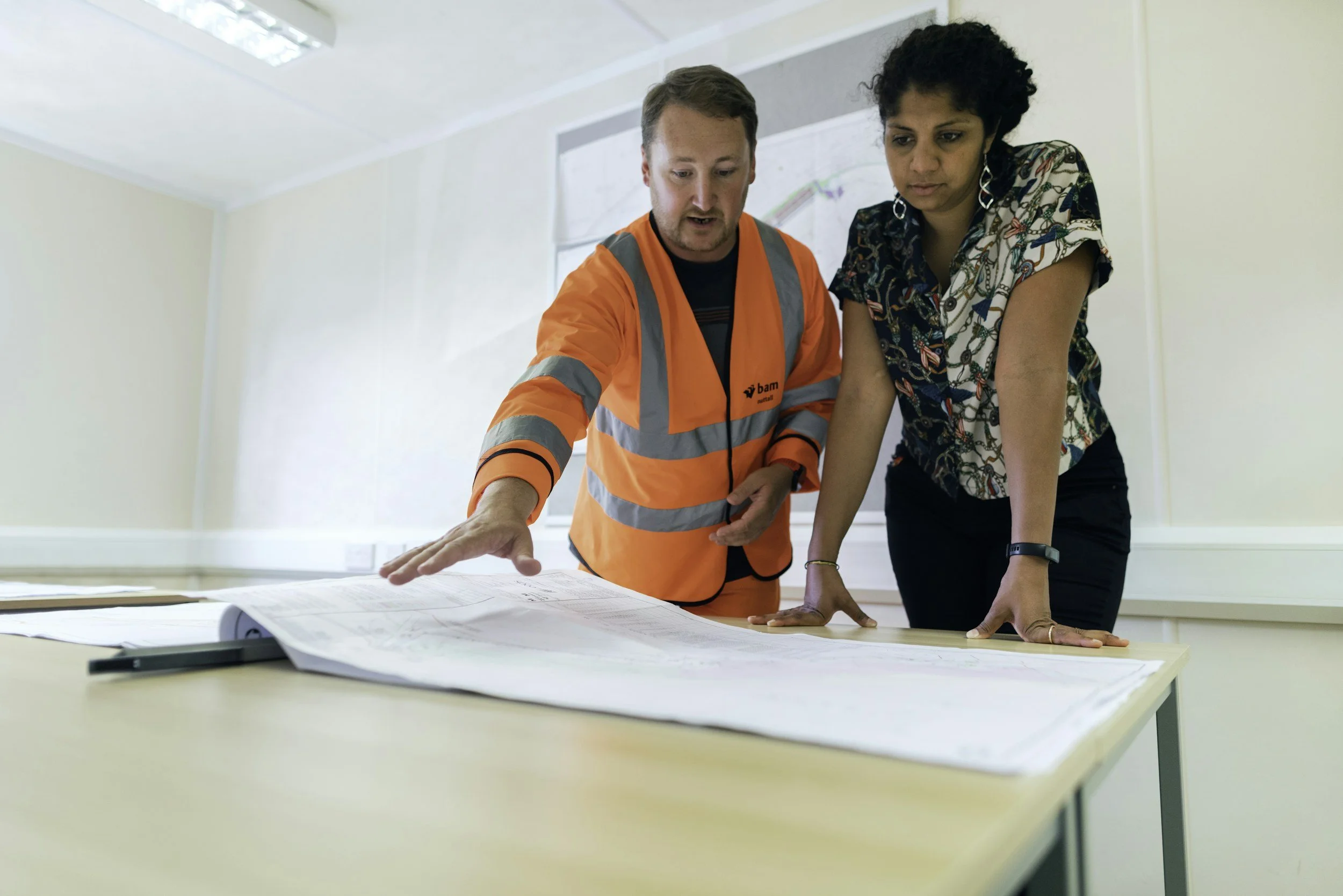
Contractor explaining process to client
Most homeowners spend more time researching a kitchen appliance than they spend vetting the contractor who will build their kitchen.
That is not a criticism — it is a reflection of how unfamiliar the process feels. You are not a construction professional. You do not know what questions to ask. And the contractor sitting across from you has done this conversation hundreds of times and knows exactly what to say.
The result is that homeowners regularly hire contractors who seemed perfectly reasonable in the interview and turned out to be anything but — contractors who used someone else's license, lowballed the estimate to win the job, buried the real cost in change orders, handed the work off to the cheapest subcontractors they could find, or simply ignored the drawings and built what they felt like building.
This post is for every homeowner who is about to sit down with a contractor and wants to know what to actually ask — starting with a mistake that happens before the interview even begins.
When to hire a contractor — and why most people get the sequence wrong
One of the most common mistakes in renovation planning is hiring a contractor before hiring a designer. It feels logical — you want to know what things cost before you commit. But it produces exactly the opposite of what you need.
A contractor cannot give you a realistic number for something that hasn't been designed yet. Without drawings, without a defined scope, without material specifications — they are guessing. And the number they give you, however confidently delivered, is not an estimate. It is a placeholder that will change the moment the project gets defined.
The right sequence is: designer first, contractor second. The designer defines the project — what gets built, how it gets built, what materials are used, what the drawings say. The contractor then bids against that defined scope. Now you have real numbers, real comparisons, and a basis for holding the contractor accountable throughout construction.
Hiring a contractor first and designing around their budget almost always results in a project that is either over budget, under-designed, or both.
First: verify the license yourself
Before you sit down with any contractor, look up their license independently — not from a card they hand you, not from their website, but from the state licensing board directly.
It happens more than people realize: a contractor operating under a license that belongs to someone else. The license number checks out. The name on the paperwork looks close enough. But if something goes wrong — a code violation, an injury on site, a dispute — you have no legal recourse against an unlicensed operator, and your homeowner's insurance may not cover the damage.
In Maryland, Virginia, and DC, contractor licenses are publicly searchable. Verify that the license is current, that it belongs to the person or company you are hiring, and that there are no complaints or disciplinary actions on record. This takes ten minutes and can save you everything.
The lowball estimate trap
When you get three estimates and one is significantly lower than the others, it feels like good news. It is almost never good news.
Some contractors deliberately underbid to win the project. They know the number is not realistic. They plan to make up the difference one of two ways — and sometimes both.
The first is change orders. Once you are mid-project — walls open, permits pulled, no easy way to switch contractors — they begin presenting additional costs for things that should have been in the original estimate. Each change order seems manageable on its own. Together they bring the project well above what the other contractors quoted.
The second is quality. They hit the budget by cutting costs where you cannot see them — in the subcontractors they hire, the materials they specify, the details they skip. Everything looks fine at completion. The problems show up eighteen months later, when the warranty has expired and the contractor is unreachable.
Ask every contractor: what is included in this estimate and what is explicitly excluded? A contractor who is confident in their number will welcome the question. One who is not will get uncomfortable.
Who is actually doing the work
The contractor you interview is not always the person who shows up on your job site. Most general contractors subcontract significant portions of the work — electrical, plumbing, framing, tile, painting. This is normal and not a problem in itself.
The problem is when the contractor uses the lowest subcontractors they can find to protect their margin. The work gets done — it just gets done by people who are rushing between three other jobs, cutting corners on details nobody will check, and have no accountability to your project.
Ask: who are your subcontractors for this project and how long have you worked with them? A contractor with strong, long-term relationships with their subs will answer this confidently. One who is shopping the subs on price will be vague.
Have they built modern projects before
This is one of the most important questions for anyone planning a modern or contemporary renovation — and one that most homeowners never think to ask.
Modern architecture has specific demands that traditional construction does not. Flat roofs, large-format windows, clean material transitions, exposed structural elements, minimal trim details — these require a different level of precision and craft than conventional building. A contractor who has spent their career building traditional homes will often struggle with the tolerances and the thinking that modern work requires.
The result is a modern design built with conventional habits — gaps where there should be none, transitions that are almost right, details that miss the precision that makes the difference between a modern home and a home that is trying to look modern.
Ask to see photos of modern projects they have completed. Better yet, ask to visit one. Look at how the transitions are handled, how the materials meet, how the details are resolved. A contractor who has done it well will be proud to show you. One who hasn't will redirect you to something else.
Can they actually read the plans
Not every contractor can fully read a set of architectural drawings — and this surprises most homeowners.
Construction drawings communicate a significant amount of information — dimensions, materials, details, specifications, notes. A contractor who cannot read them fluently will miss things. Sometimes small things. Sometimes things that require tearing out finished work to correct.
If you have drawings, bring them to the interview. Ask the contractor to walk you through them. Watch how they engage. Do they reference specific details? Do they ask clarifying questions that show they understand what is being asked of them? Or do they flip through quickly and tell you it all looks straightforward?
A contractor who is comfortable with plans will engage with them seriously. One who is not will minimize them.
The contractor who gets creative
Some contractors have a habit of substituting their own judgment for the drawings. They decide on site that a detail is easier a different way, that a material can be swapped for something they have on hand, that a dimension is close enough. They do not ask. They just do it.
A wall moved two inches affects a cabinet run. A ceiling height reduced by four inches changes the proportion of a room. A material substitution that seemed equivalent looks wrong the moment it is installed.
Ask directly: if you encounter something in the field that differs from the drawings, what is your process? The right answer is that they stop, document it, and contact the designer or owner before proceeding. Any other answer is a warning sign.
The contractor who never asks questions
A good contractor asks a lot of questions before and during a project. They ask about intent. They ask about details that are unclear. They ask before they make a decision that affects something downstream.
A contractor who never asks questions is not confident — it is a sign that they are either not reading the drawings carefully enough to know what they do not understand, or that they have already decided they will handle things their own way.
When a designer is involved, the best contractors maintain an active dialogue throughout construction — flagging conditions, confirming interpretations, raising issues early when they can still be resolved cleanly. The contractors who cause the most problems are often the ones who go silent and build.
Questions to ask in every contractor interview
Can I verify your license directly with the state licensing board? Any contractor worth hiring will say yes without hesitation.
Walk me through what is included in this estimate and what is not. You are looking for specificity and confidence, not vague reassurance.
Who are the subcontractors you plan to use, and how long have you worked with them? Strong contractors have strong, consistent relationships with their subs.
Can you show me modern projects you have completed — and may I visit one? For any contemporary renovation, this is non-negotiable.
Can you walk me through these drawings? Watch how they engage. Questions and specificity are good signs. Vagueness is not.
If something in the field differs from the drawings, what do you do? The right answer involves stopping and communicating before proceeding.
Can you provide references from projects similar to this one? References are standard. Willingness to let you see the work in person is a mark of confidence.
Why having a designer changes everything
Every problem described in this post becomes significantly easier to manage when a designer is involved from the start.
A designer helps you evaluate contractor bids against a complete set of drawings — so you can compare apples to apples and spot the estimate that is suspiciously low. They stay involved during construction, maintaining the dialogue with the contractor that keeps the project on track and the drawings respected. They catch field changes before they become problems. And they give you someone in your corner who understands both the design intent and the construction process.
Good contractors welcome this. They know that a designer on a project means clearer drawings, faster answers to field questions, and a client who understands what was agreed to. The contractors who resist designer involvement are often the ones with the most to hide.
At RT Studio we work with homeowners in the DMV from the first conversation through construction completion. We prepare drawings that are code-compliant and construction-ready. We show you the entire project in 3D and virtual reality before anything is built. And when it is time to hire a contractor, we bring something most homeowners don't have access to on their own: a trusted network of contractors who have worked with us on modern projects, who can read our drawings, who ask the right questions, and who can answer every one of the questions above with confidence.
If you are planning a renovation and want to start the right way — designer first, contractor second, with a team you can trust — we would like to talk.
→ Book a consultation at rtarchstudio.com