
Constraints Make the Design
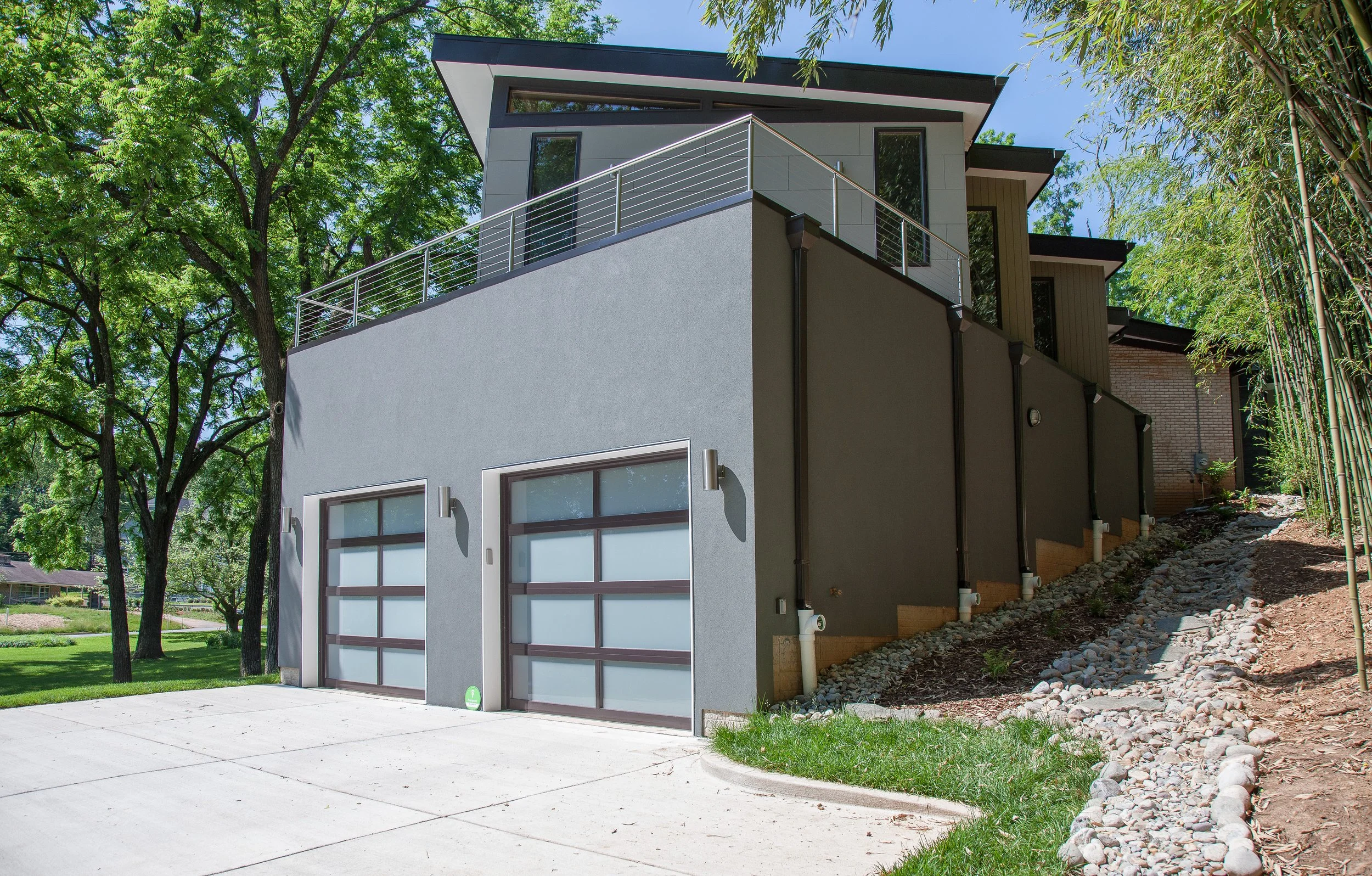
Old Farm Ln House property line restrictions
Every project starts the same way.
Not with a vision. Not with a blank page. With a list of things that won't move.
A budget that is real and fixed. A zoning envelope that dictates exactly how far you can build and how high. An existing structure with walls and systems that are expensive to relocate. A site with grading that complicates everything you thought would be simple.
Most people experience constraints as the problem. The thing standing between them and the project they imagined.
After years of designing modern homes in the DMV — renovations, additions, new construction — I have come to see them differently. Constraints are not the obstacle to good design. They are often the reason for it.
Here is what each major constraint actually teaches you — and what good design does with it.
Budget — the constraint that forces clarity
A fixed budget is the most honest constraint there is. It forces a conversation that most projects avoid for as long as possible: what actually matters here?
When money is unlimited — or feels unlimited — everything gets included. The project grows. The scope expands. Decisions get deferred because there is always room to add more later. The result is often a project that does many things adequately and few things beautifully.
A tight budget makes you choose. And choosing is where design begins. When you cannot do everything, you ask: what is the one move that changes the most? What is the intervention that makes the whole house feel different, not just one room? Where does a dollar spent produce the most impact on how this family lives?
Some of the most resolved projects I have worked on had the tightest budgets. Not because constraint is virtuous — but because constraint demanded precision. Every decision had to earn its place. Nothing was there by accident.
Wright understood this. The Usonian houses were built on fixed, modest budgets — and they remain some of the most spatially rich homes ever designed. The budget did not limit the architecture. It sharpened it.
Zoning and setbacks — the constraint that defines the envelope
Zoning regulations tell you exactly how much of your lot you can build on, how close you can get to the property line, how high you can go. To most homeowners, this feels like the county drawing a box around their ambitions.
To a designer, it is the starting point.
Understanding the zoning envelope precisely — where the building can go, how it can grow, what exceptions or variances might be available — is one of the first things we do on every project. Because inside that envelope, there is almost always more opportunity than the homeowner realized.
We worked with a family in Rockville whose lot had strict setback requirements on three sides. The addition they originally imagined was not possible. But when we mapped the full envelope — where the buildable area actually was — we found room for something they had not considered: a rear addition that connected the living area directly to the backyard and opened the kitchen to light it had never had. The constraint that closed one door opened another that turned out to be better.
Zoning does not tell you what to build. It tells you where to look.
The existing structure — the constraint that tells you what the house wants
Renovating an existing home means working with what is already there — foundations, structural walls, roof lines, window openings, mechanical systems. Some of these can be moved. Many cannot, or cannot without a cost that makes no sense.
The instinct is to fight the existing structure — to impose the new design onto it regardless of what is already there. This almost always produces friction. The project costs more. The results feel forced.
The better approach is to read the structure. To ask what the house is already trying to do — where its logic wants to take you — and design with that grain rather than against it.
A ranch with a strong horizontal line is telling you something about how it wants to extend. A house with a steep roof pitch is telling you something about volume. A foundation that runs in a particular direction is telling you something about where the addition wants to go. These are not limitations — they are the house speaking. A good designer listens.
When we transformed the Rockville ranch — removing the pitched roof, adding clerestory windows, replacing the facade with gray panels and cedar — we were not imposing a new idea onto an old house. We were finding what the house had always been trying to become and helping it get there.
Site grading — the constraint that reshapes everything
Of all the constraints on a project, site grading is the one that surprises homeowners the most. The lot looked flat on the survey. It is not flat in the field. There is a slope toward the house that complicates drainage. A grade change that makes the addition more expensive to connect. A low point that floods in a heavy rain.
Contractors who encounter grading problems mid-project either charge significant change orders to address them or work around them in ways that create problems later. Neither is good.
A designer who understands the site before the project is defined treats the grade as information. A sloped lot that makes a ground-floor addition complicated might make a walkout lower level possible — one that adds square footage, connects to the backyard, and creates a level of the home that did not exist before. A grade change that seems like a liability becomes a feature.
The site is not separate from the design. It is part of it. The grade, the drainage, the orientation, the existing trees — all of it shapes what the project can be and where its opportunities are. Reading the site carefully at the beginning of a project is not a preliminary step. It is design work.
What all constraints have in common
Every constraint — budget, zoning, structure, grading — does the same thing: it narrows the field of possibilities until the right answer starts to become visible.
Unlimited freedom sounds appealing. In practice, it is paralyzing. When anything is possible, nothing is obvious. Constraints give the designer something to push against — and in that resistance, the design finds its shape.
This is why the most important thing a designer brings to a constrained project is not the ability to work around the limits. It is the ability to see the opportunity inside them — the smarter layout, the better flow, the move that improves daily life precisely because it had to be found rather than invented from nothing.
At RT Studio we start every project by mapping the constraints — all of them, at once. Not to find out what we cannot do, but to find out exactly where the opportunity is. We show you the project in 3D and virtual reality before anything is built, so you can see how the constraints shaped the design and why every decision was made.
If you have a project with constraints that feel like they are getting in the way — we would like to take a look. The opportunity is almost always in there.
→ Book a consultation at rtarchstudio.com