
The Green Monster on My Street
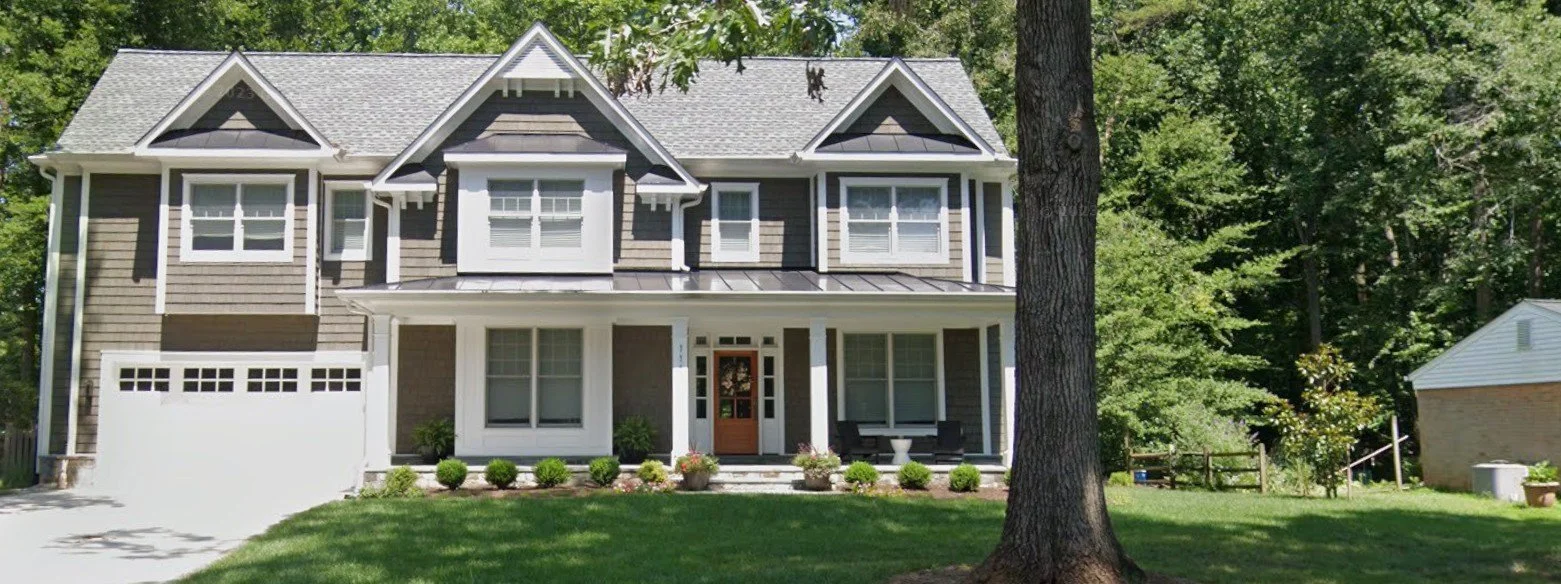
The new house, compare to the scale of the next house.
I am a residential designer. I think about buildings for a living. I have spent years helping homeowners renovate, expand, and transform houses into something better than what they started with.
And I cannot stop staring at what just went up on my street.
A regular 1960s house — modest, unremarkable, nothing special — got sold last year. A spec developer bought it, tore it down, and built something in its place that has absolutely nothing to do with where it is. It is enormous. It is the wrong color. The trees are gone. And every time I turn onto my street I feel something that I can only describe as grief — for the house that was there, for the trees that took sixty years to grow, and for the street that used to feel like a street.
I am writing this because I suspect I am not the only one who has felt this. And because I want to explain, from the inside of this profession, exactly why it keeps happening — and what we could do instead.
The house that got torn down
It was not a beautiful house. I want to be honest about that. It was a typical 1960s ranch — low, horizontal, a little dated. The kind of house that does not get photographed and does not get featured anywhere. The kind of house that most people drive past without noticing.
But it knew where it was.
It sat at the right height for the street. It held the setback that every other house on the block held. The mature trees around it — trees that took decades to become what they were — defined that corner of the block in a way that no building could replicate. The house was modest. But it was a good neighbor.
I did not appreciate it enough until it was gone.
What replaced it
The new house is big. Bigger than anything else on the street. It pushes to the front of the lot in a way that nothing around it does. The trees are gone — all of them, as far as I can tell — because the footprint needed the space.
The color is a shade of green that has no relationship to anything on the block. Not the neighboring houses. Not the landscape. Not the street. It is the color of a brand decision made by someone who was not thinking about this street at all.
The whole thing reads as foreign. Not because it is new — new is fine, new can be wonderful — but because it was designed for a catalog and placed on a lot without anyone asking what the lot was part of.
I drive past it every day. The street feels different now. Smaller in some ways. Louder. The kind of place where something happened that cannot be undone.
Why this keeps happening
A spec developer is not building a home. They are building a product. The goal is to extract the maximum square footage from the lot, build it at the lowest possible cost, and sell it at whatever the zip code will support.
Nobody on that team visited the street before they designed the house. Nobody looked at the neighboring setbacks or the canopy or the scale of what surrounds the lot. Nobody asked what the neighborhood needed or what the block would feel like with something this large on that corner.
They built, sold, and moved on. The street lives with it.
This is not a zoning failure — though zoning could do more. It is a design failure. Or more precisely, it is what happens when design is removed from the process entirely and replaced with a spreadsheet.
The house that didn't have to go
Here is what bothers me most: it did not have to go.
That 1960s ranch had good bones. A solid foundation. A lot with established trees and the right relationship to the street. In the right hands — with a designer who understood what was worth keeping and what needed to change — it could have become something genuinely modern and genuinely beautiful without losing what made it belong to that block.
We have done exactly this with houses like it. We have taken modest ranches that everyone assumed were past saving and transformed them — raising the roof, relocating the kitchen, opening the living area to the backyard, replacing dated facades with something clean and contemporary — while keeping the footprint, the scale, and the relationship to the street that the original house had always maintained.
The neighbors notice. They notice in the best possible way.
The result is a house that is modern and improved and genuinely better to live in — and that the street accepts because it earned its place rather than ignoring it.
What good design actually does
A designer who takes a project in an established neighborhood seriously starts by looking at the street.
What is the scale? Where do the other houses sit on their lots? What do the trees contribute? What does the block feel like to walk down — and what would make it better?
These are not sentimental questions. They are design questions. And they produce different buildings than the ones that get built when nobody asks them.
A new house or a transformed house in an established neighborhood can be genuinely modern. It can be ambitious, contemporary, and completely different from what was there before. But it can also respect the scale of what surrounds it, respond to the street it sits on, and earn its place in a neighborhood that existed long before it arrived.
That is the difference between a building that belongs and a green monster.
If you own one of those houses
If you own a modest house from the 1960s or 70s in a neighborhood worth caring about — and you have been told, by a developer or a contractor or the market, that it needs to come down to become something worth living in — I would ask you to get a second opinion.
The lot, the trees, the scale, the street — these are assets that a new build cannot replicate. What you have may be exactly the right starting point for the house you actually want.
At RT Studio we work with existing houses in established neighborhoods — renovating, expanding, and transforming them into modern homes that earn their place on the street rather than ignoring it. We show you the entire project in 3D and virtual reality before anything is built, so you can see exactly what your house could become before a wall comes down.
If you have a house with more potential than it is showing — we would like to take a look before anyone tells you it needs to go.
→ Book a consultation at rtarchstudio.com