
Renovation Mistakes That Kill Your Home's Resale Value
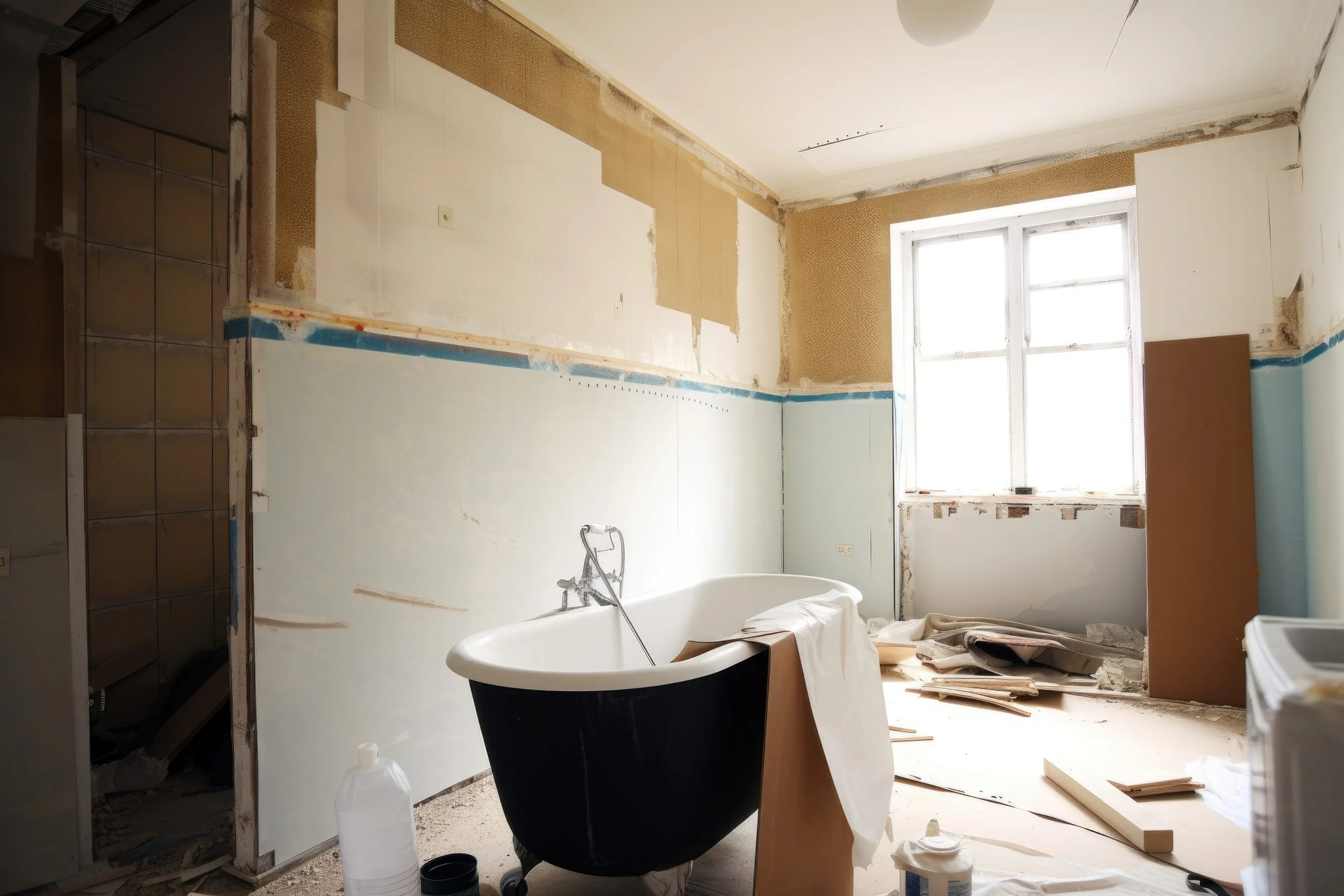
People make mistakes when renovating their bathrooms
Most homeowners renovate for themselves — and that is exactly as it should be. You live in the house. It should work for you.
But even if selling is the last thing on your mind right now, the decisions you make during a renovation have a long memory. Some of them add real value to your home. Others quietly take it away — and the damage does not show up until the day you put the house on the market and wonder why the offers are not where you expected.
Here are the renovation mistakes that consistently hurt resale value — and what thoughtful design does to avoid them.
1. Over-improving for the neighborhood
Every neighborhood has a price ceiling — a level beyond which buyers are not willing to go regardless of what is inside the house. When a renovation pushes a home significantly above that ceiling, the investment rarely comes back.
A $150,000 kitchen in a neighborhood where houses sell for $400,000 is not an asset — it is a liability. Buyers in that price range are not looking for a kitchen at that level. And buyers who want a kitchen at that level are shopping in a different neighborhood entirely.
This does not mean you should not renovate. It means the renovation should be proportional — calibrated to what the market will support and where the returns are actually real. A designer who understands both the house and the market context helps you spend where it counts and hold back where it does not.
2. Removing bedrooms
Bedroom count is one of the primary filters buyers use when searching for a home. Going from four bedrooms to three — even to create a beautiful primary suite, a home office, or a larger living area — can significantly reduce the pool of buyers willing to consider your home and the price they are willing to pay.
The problem is that the improvement often feels justified in the moment. The space is more livable. The primary bedroom is finally the size it should be. But the market does not value livability in the abstract — it values bedrooms as a concrete, searchable, comparable number.
Before eliminating a bedroom, it is worth asking whether the same spatial goal can be achieved without the loss. Often it can — with a layout that is smarter rather than simply larger.
3. Unpermitted work
Unpermitted work is one of the most reliably damaging things a homeowner can do to their home's value — and it is often done with the best intentions. The addition seemed straightforward. The permit process seemed slow and expensive. The contractor said it would be fine.
It is not fine. Unpermitted work shows up in the disclosure process, triggers lender concerns, and gives buyers significant leverage to negotiate the price down — or walk away entirely. In some cases, it requires tearing out completed work to bring it into compliance before the sale can close.
Every renovation that requires a permit should get one. A designer who prepares code-compliant drawings from the start makes this process faster and less painful — and protects the value of the investment for as long as you own the home.
4. Highly personalized finishes
There is nothing wrong with having strong taste. But there is a real cost when strong taste gets built into surfaces that are expensive to change.
A boldly colored tile that covers an entire bathroom. A highly specific material that reads as dated within a few years. A finish that was the right choice for you and will require a full gut renovation for the next owner to undo.
The principle here is not to renovate for a hypothetical future buyer — it is to make permanent decisions conservatively and express personality in the elements that are easier to change. A distinctive tile in a powder room is a different commitment than the same tile across every surface of a primary bathroom.
Good design navigates this naturally — using bold moves where they create impact and restraint where permanence demands it.
5. Neglecting the exterior
A buyer's impression of a home is formed before they walk through the door. The exterior — the facade, the entry, the landscaping, the driveway — is the first thing they see and the context through which they evaluate everything inside.
Homeowners who invest heavily in interiors while leaving the exterior dated or unresolved consistently underperform at sale. The beautiful kitchen does not overcome the first impression of a facade that looks tired. The renovated primary suite does not compensate for an entry that feels neglected.
Exterior improvements — updated cladding, a resolved entry, improved landscaping, a facade that reads as intentional — consistently deliver strong returns. And when an addition or renovation is already touching the exterior, it is the opportunity to address this at the lowest possible incremental cost.
6. Additions that don't integrate with the original house
An addition that reads as bolted on — mismatched materials, a roofline that collides with the original, an awkward transition from old to new — signals to buyers that the work was done without design thinking. It raises questions about what else was done without care.
Well-integrated additions, by contrast, make the house feel like it was always meant to be this size. The exterior reads as coherent. The interior flows. The buyer experiences the whole house as a considered object, not a series of separate decisions made at different times by different people.
The difference between these two outcomes is almost entirely in the design phase — in whether someone looked at the whole house before the addition was defined, or whether the addition was simply attached and hoped for the best.
7. Closing off the flow
Open, connected living spaces consistently perform better at sale than compartmentalized ones. Buyers respond to the feeling of flow — of moving through a home without friction, of spaces that connect to each other and to the outside.
Renovations that add walls, divide open spaces, or create dead-end rooms in the name of function often reduce the perceived spaciousness of a home significantly — even when the square footage stays the same. A house that felt open before the renovation feels closed afterward, and that feeling is hard to explain in a listing but immediately apparent in a showing.
Before adding any partition or wall, it is worth asking whether the functional goal can be achieved another way — through furniture arrangement, through a partial wall, through a design move that preserves the flow while still creating the separation the homeowner needs.
The common thread
Every mistake on this list has the same root cause: a renovation decision made without looking at the whole picture. Without understanding how a single change affects the rest of the house. Without thinking about what the market will value when the time comes to sell.
Good design is not just about how a home looks or feels while you live in it. It is about making decisions that hold their value — decisions that are coherent, considered, and built on an understanding of what makes a home work for the people inside it and the market around it.
At RT Studio we help homeowners renovate, add on, and build new with all of this in mind — from the first conversation through construction. We show you the full project in 3D and virtual reality before anything is built, so you can see exactly what you are getting and make every decision with confidence.
If you are planning a renovation and want to make sure it adds value rather than quietly taking it away — we would like to talk.
→ Book a consultation at rtarchstudio.com