
What AI Can't Solve That Your Designer Can
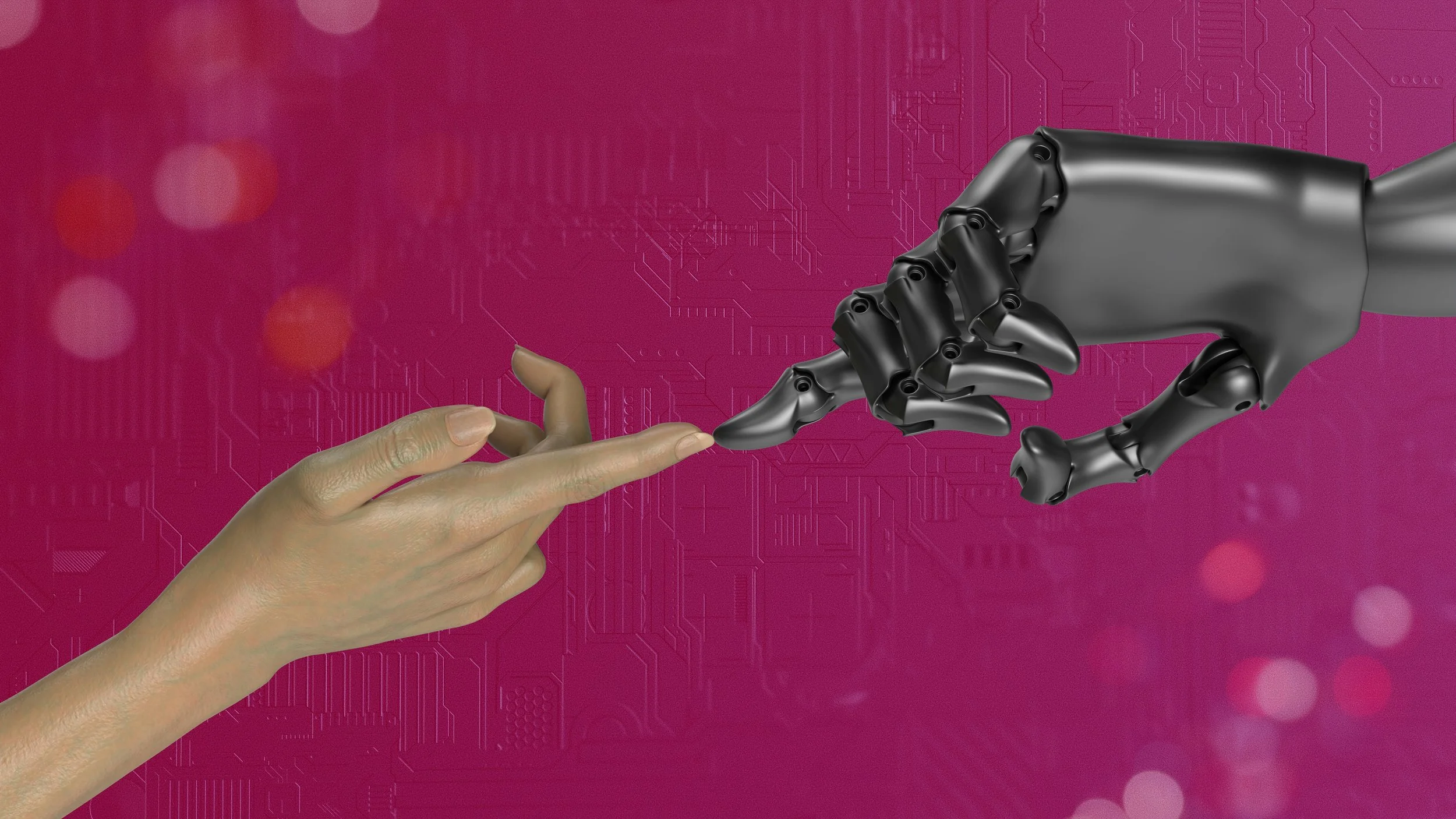
Human hand meets robot hand — the line between AI and human design - Photo: Igor Omilaev / Unsplash
AI design tools have gotten remarkably good at one thing: producing images that look like what you want.
Type a few words — modern kitchen, open floor plan, lots of light — and within seconds you have a rendering that feels close to a dream. It's fast, it's visual, and it's genuinely useful for getting your ideas out of your head.
But there is a significant gap between an image that looks right and a home that is right. That gap is where a designer works.
Here is what AI cannot do — and why it matters for your project.
1. It cannot visit your home
Every house exists in a specific place, on a specific lot, with a specific orientation to the sun, the street, the neighbors, and the wind. These are not details you can type into a prompt.
A designer walks the site. They notice where the light falls in the morning and where it disappears by afternoon. They see which tree gives you privacy and which one will eventually cause a problem with the foundation. They understand how the grade of the land will affect drainage, access, and the cost of construction.
AI generates from averages. A designer designs from specifics.
2. It cannot identify the real problem
Most homeowners come to us knowing what they want to change. Very few come knowing why it feels wrong.
You ask an AI for a new kitchen layout. It gives you a new kitchen layout. But if the real issue is that your kitchen is in the wrong part of the house — disconnected from the backyard, poorly related to the living area, fighting the natural flow of how your family moves — a new layout in the same wrong location will not fix how you feel in your home.
Diagnosis requires conversation, observation, and experience. It requires someone who has seen enough homes and enough families to recognize the pattern. That is a human skill, and it is one of the most valuable things a designer brings to a project.
3. It cannot navigate your jurisdiction
Zoning regulations, setback requirements, lot coverage limits, historic district rules, HOA guidelines, energy codes, accessibility standards — these vary not just by state or county, but sometimes by street.
A beautiful AI-generated design for a rear addition might be four feet into your required setback. A flat roof that you love might be prohibited in your subdivision's covenants. An ADU you've been planning might require a conditional use permit that takes six months to obtain.
A designer knows how to work within these constraints from the beginning — not discover them halfway through construction.
4. It cannot make judgment calls
Design is full of moments where there is no single right answer — only better and worse ones for this specific family in this specific home.
Should the primary bedroom face east for morning light or west for evening quiet? Should the open plan stay open, or does this family actually need a door they can close? Is the budget better spent on the envelope — windows, insulation, roof — or on the interior finishes the client keeps gravitating toward?
AI can present options. It cannot weigh them against your life. A designer can — because they have listened to you, walked your home, and understood what you are actually trying to solve.
5. It cannot be accountable
When something goes wrong — a detail that doesn't work in the field, a contractor who interprets the drawings differently, an unexpected condition behind the wall — you need someone who can respond, adapt, and take responsibility for the outcome.
An AI generates and moves on. A designer is present through the entire process: design, permitting, construction administration, and the moment you turn the key.
Where AI fits — and where it ends
AI is a genuinely useful tool for exploration. It helps homeowners find a visual language, communicate preferences, and arrive at a first conversation with something more concrete than words alone.
That is where it ends.
The work that follows — understanding your site, identifying the real problem, designing within your jurisdiction, making the right calls, and seeing the project through — requires judgment that only comes from experience, presence, and professional accountability.
That is what a designer is for.
If you've been exploring ideas with AI and are ready to talk about what's actually possible for your home — let's talk. → info@rtarchstudio.com