
The Real Cost of a Home Addition in the DMV
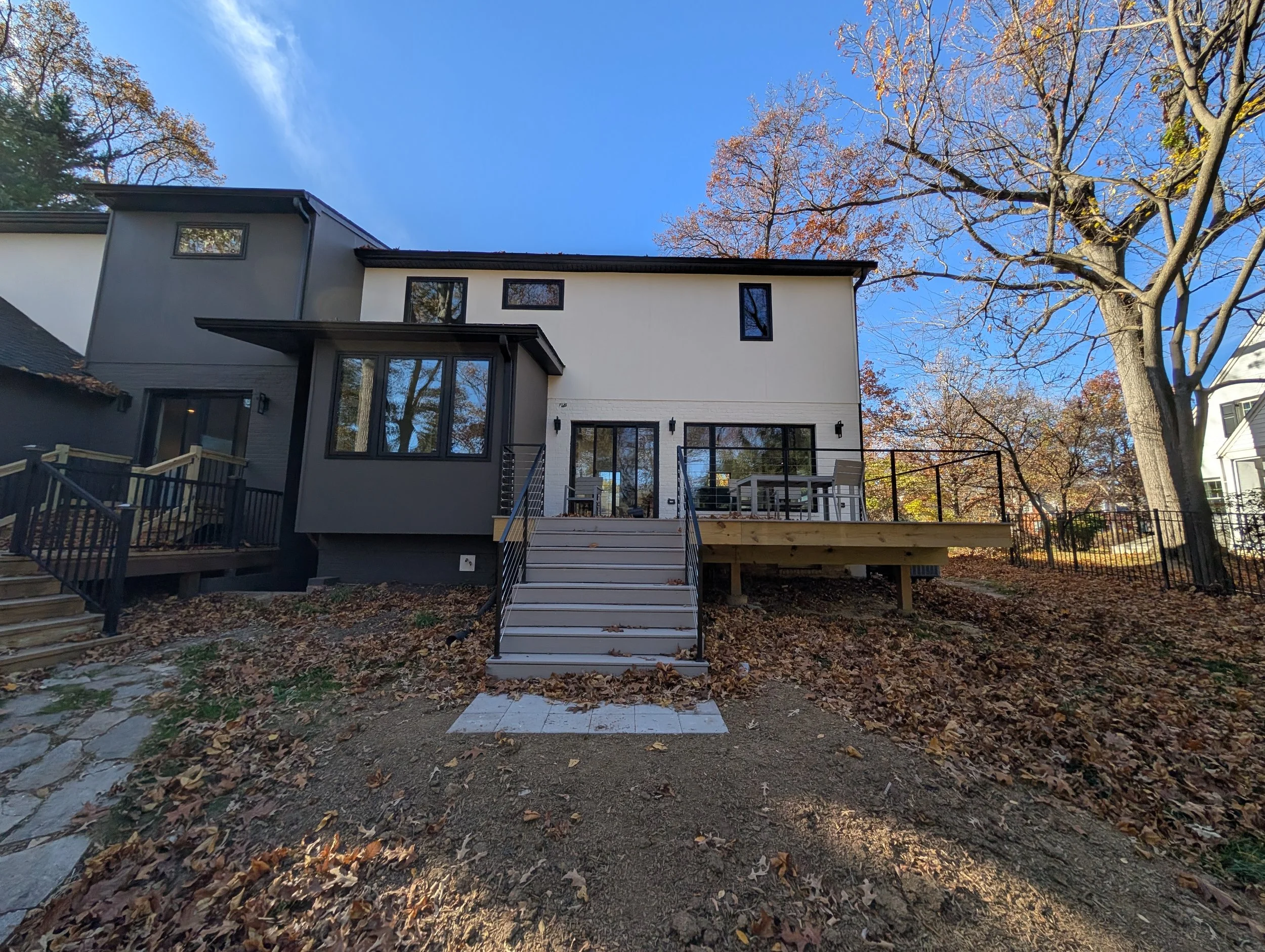
Modern home addition in Montgomery County designed by RT Studio
Everyone wants to know the number.
"How much does an addition cost?"
And everyone wants a simple answer.
Here's the truth: There isn't one.
But there is a real conversation worth having about cost. And it's more useful than any number I could give you.
In Montgomery County, most R‑60 and R‑90 lots allow rear additions of roughly 20–25 feet depending on setbacks
What Actually Drives the Cost of a Modern Addition
You wouldn't ask "how much does a car cost?" and expect one answer.
A used Honda? A new Tesla? A vintage Porsche?
Same with additions.
A basic bump-out? A second-story addition? A full modern wing with custom details?
The range is massive.
See more information in our Additions page
Typical Home Addition Costs in Montgomery County & the DMV
In the DMV, home additions typically run:
$200-$600 per square foot for quality work.
But.
That's like saying "cars cost between $20K and $200K." Technically true. Practically useless.
What actually matters: What drives the cost up or down.
The Real Factors That Increase Addition Costs
Foundation Work
If you're going up, you might need to reinforce what's below. If you're going out, you need new foundation. Impact: $15K-$40K+ depending on soil conditions and scope.
Bethesda and North Bethesda colonials often require structural reinforcement before opening the rear wall for an addition
Roof Complexity
Simple shed roof? Manageable. Matching existing rooflines? More complex. Cathedral ceilings? Even more. Impact: Can add $20K-$50K to the project.
Site Conditions
Flat, accessible lot? Great. Steep slope? Limited access? Need a crane? Impact: $10K-$30K in added costs.
Rockville and Silver Spring lots frequently limit side additions due to narrow R‑60 setbacks
Systems Integration
HVAC, electrical, plumbing all need to extend into the new space. Upgrading the whole house system vs. extending existing? Impact: $15K-$40K difference.
Finishes
Builder-grade vs. custom millwork. Laminate vs. natural stone. Standard windows vs. floor-to-ceiling glass. Impact: This is where you have the most control.
Permitting & Zoning
Montgomery County’s zoning summary outlines specific setback and permitting requirements. Impact: $5K-$15K in soft costs.
Arlington and Fairfax permitting typically moves faster than Montgomery County, especially for straightforward rear additions
See our Montgomery County page for more information
The Hidden Costs Most Homeowners Miss
The Hidden Costs
Temporary living disruption - Sometimes you need to move out during construction.
Landscaping restoration - Construction equipment tears up yards.
Utility upgrades - Your 1970s electrical panel might not support a major addition.
Furnishing the new space - You budgeted for the addition but forgot about furniture.
Carrying costs - If you're financing, interest adds up during construction.
What Matters More Than the Price Per Square Foot
1. Does it solve your problem?
Adding 300 square feet won't fix a fundamental layout issue.
Sometimes the answer isn't more space—it's better space.
2. Will you stay long enough?
Planning to sell in 2 years? Different math than staying 10 years.
The joy of living in the space matters if you're there to enjoy it.
3. Does it fit your neighborhood?
A $200K addition on a $500K house in a $600K neighborhood? Smart.
A $200K addition on a $500K house in a $450K neighborhood? You won't recoup it.
4. Are you adding what buyers want?
Primary suite? Yes. Functional kitchen expansion? Yes. Elaborate home theater? Maybe not.
Three Realistic Budget Levels for Additions in the DMV
The Essentials: $200-$250/sq ft
Basic construction. Code-compliant. Functional.
You get:
Solid structure
Standard windows
Builder-grade finishes
Professional work
You don't get:
Architectural details
Premium materials
Custom design
Best for: Straightforward additions focused purely on adding square footage.
The Sweet Spot: $300-$500/sq ft
This is where good design happens.
You get:
Thoughtful architectural details
Quality materials that age well
Better integration with existing home
Custom elements where they matter
Best for: Most of our clients. Balance of quality and investment.
The Premium: $500-$600+/sq ft
Full custom. High-end everything.
You get:
Architectural distinction
Premium materials throughout
Complex structural elements
Custom millwork and finishes
Best for: Homes where the addition needs to match high-end finishes throughout.
A Real Montgomery County Example
400 sq ft primary suite addition in Bethesda:
Foundation & framing: $60K Roof integration: $25K Systems (HVAC, electrical, plumbing): $30K Windows & doors: $20K Interior finishes: $35K Bathroom build-out: $40K Permits & soft costs: $10K Contingency: $15K
Total: ~$235KPer square foot: ~$588
Is that expensive?
Compared to what? The alternative is moving. Buying a bigger house in the same neighborhood would cost $800K+, plus moving costs, realtor fees, and leaving a home you love.
Suddenly $235K looks different.
What Most Homeowners Don’t Realize About Additions
Good additions cost more than you think.
But they're also worth more than you think.
Not just in resale value (though that matters).
In daily quality of life. In not having to move. In getting exactly what you want instead of compromising on someone else's house.
The Question That Actually Matters
Not "how much does it cost?"
But "what's it worth to you?"
If an addition:
Lets you stay in a neighborhood you love
Gives your family the space you actually need
Solves problems you deal with every day
Creates a home that works for the next decade
What's that worth?
How to Build a Realistic Addition Budget
Step 1: Know your real number
Not what you wish it cost. What you can actually invest.
Include 15-20% contingency. Things come up.
Step 2: Understand the variables
Where can you save without compromising? Where should you not cut corners?
Step 3: Design within reality
A great 300 sq ft addition beats a compromised 500 sq ft addition.
Step 4: Plan for the total investment
Architecture fees. Construction. Permits. Landscaping. Furnishing.
Budget for all of it upfront.
Why We Start Every Project With Budget First
We don't design first and price later.
That's how dreams get crushed.
We establish budget early. Design within it. Adjust as needed.
The goal: Fall in love with a design you can actually build.
Not a rendering that's $100K over budget.
The Bottom Line on Addition Costs in the DMV
Home additions in the DMV typically cost $200-$600 per square foot.
But that range is useless without context.
What matters:
Your specific site conditions
Your design goals
Your finish expectations
Your timeline
Your neighborhood context
The real cost isn't the number.
It's the cost of getting it wrong—building something you don't love, or worse, not building at all and staying stuck in a home that doesn't work.
This guide reflects typical conditions in Montgomery County, North Bethesda, Rockville, Arlington, and Fairfax. RT Studio designs modern additions and whole‑home transformations throughout the region.
Ready to understand what your addition would actually cost?
Start with an MVA | See our work
#HomeAddition #AdditionCost #DMVHomes #HomeRenovation #ConstructionCosts #HomeInvestment #MarylandHomes #VirginiaHomes #BethesdaHomes #RockvilleHomes #HomeExtension #RenovationBudget #ArchitecturalDesign #HomeImprovement #CustomAddition
WANT MORE GUIDANCE? Download our free planning guides: project checklists, budget worksheets, and a sample Modern Vision Assessment. [Browse Free Guides →]