
What Your Project Actually Costs — And What Drives the Number
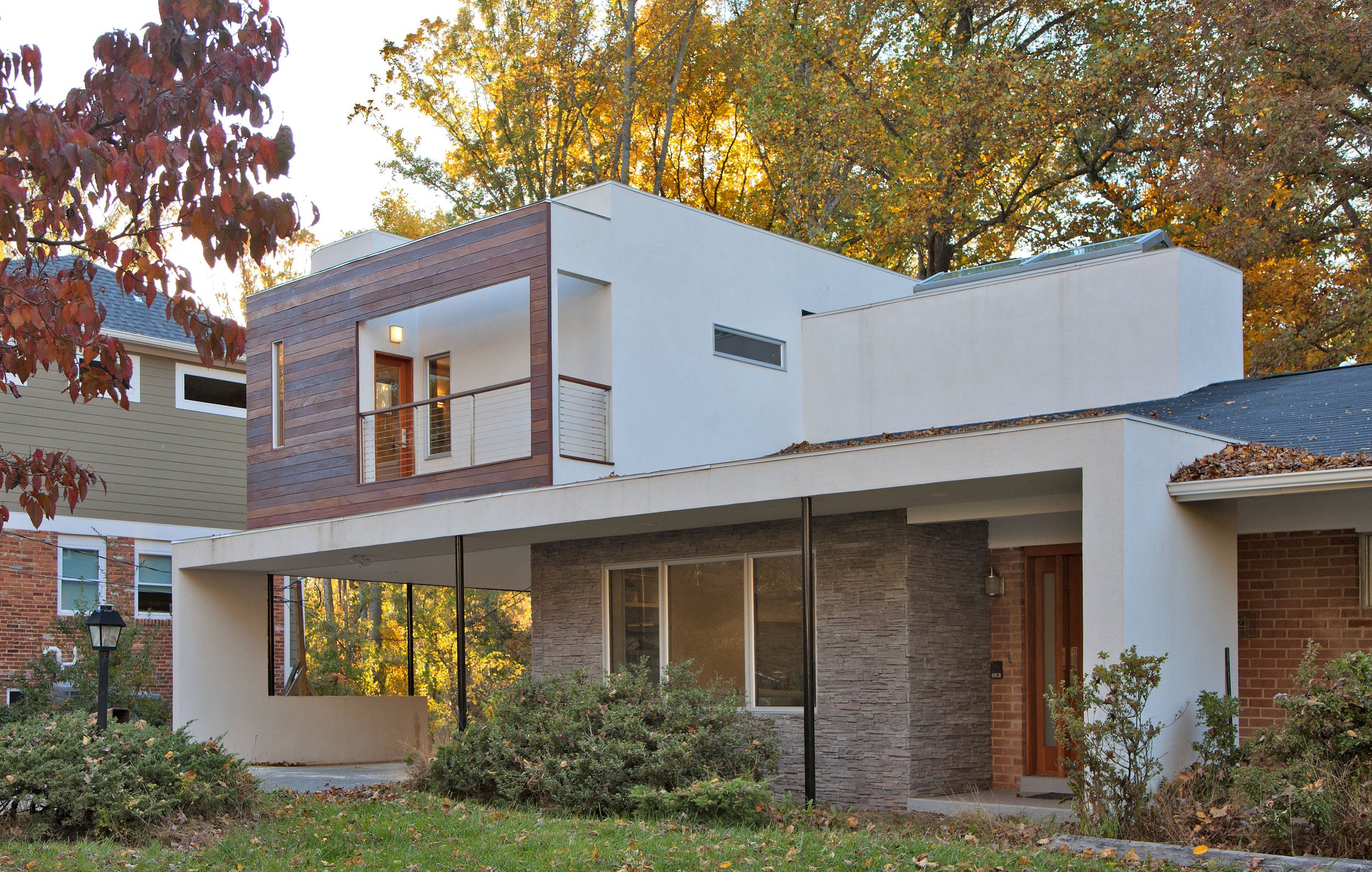
Tilden Park Home - Addition and Renovation - North Bethesda, MD
The homeowners who get the best results from their projects are not always the ones with the biggest budgets.
They are the ones who understood what drives cost before anyone started drawing. Who knew which decisions would move the number significantly and which ones were details. Who walked into the first contractor conversation with enough knowledge to ask the right questions — and to recognize when the answers did not add up.
This post is for those homeowners. Or for anyone who wants to become one.
We are not going to give you a price per square foot. Those numbers are misleading — they average out decisions that are anything but average and give false precision to something that depends entirely on specifics. What we are going to do is give you the framework that the most informed clients use to understand their projects before they commit to anything.
What you need to understand about the design process first
Before construction costs, there is a step that determines whether your construction budget is spent well or wasted. Most homeowners skip it or minimize it. The ones who get the best results do not.
Design is not a luxury step before the real work begins. It is the step that makes all the other steps possible — and the step that puts you in control of your project rather than at the mercy of it.
A design process moves through several phases: discovery, schematic design, design development, construction documents, and construction administration. Each phase builds on the last. By the time construction starts, a well-designed project has been thought through completely — every decision made deliberately, every cost implication understood, every surprise anticipated as much as possible.
The clients who skip design to save money almost always spend more in the end. Not on design fees — on construction decisions that get made without the right information, on change orders that could have been caught on paper, on a finished project that solves the wrong problem.
The clients who invest in design arrive at construction with clarity. They know what they are building. They know what it will cost. They know what they are choosing and why. That is not a small thing.
Renovation — what you need to know before you commit
If you are renovating an existing home, you are negotiating with a building that has its own history, its own conditions, and its own opinions about what is possible. The smartest renovation clients know this going in.
Know what you are moving. Every element you relocate — a wall, a plumbing fixture, a structural beam — costs significantly more than leaving it where it is. The renovation that achieves the same spatial goal by moving less is almost always the better financial decision. A good designer finds that path. A client who understands this principle can ask for it.
Expect the unexpected — and budget for it. What is behind the wall is never exactly what you expect. Older homes especially carry surprises: outdated electrical, plumbing that does not meet current code, structural conditions that need attention before new work can proceed. The homeowners who budget a contingency for unknown conditions are the ones who finish their projects without crisis. The ones who do not are the ones who have to make painful decisions mid-construction.
Understand where the finish budget goes. The difference between a modest finish package and a premium one can double the cost of a kitchen or bathroom without changing a single structural decision. Neither is wrong. Both need to be decided deliberately, with full awareness of what they cost and what they trade off against in the rest of the budget.
Never skip the permit. A renovation that moves walls, changes the electrical, or touches the plumbing requires permits. Homeowners who skip this step do not save money — they defer cost to the worst possible moment, when they try to sell the house and the unpermitted work surfaces in disclosure. The clients who permit everything protect their investment. Full stop.
Addition — what you need to know before you commit
An addition gives you new square footage that is entirely yours — no inherited constraints, no previous owner's decisions. But it has cost drivers that catch homeowners off guard regularly, and the clients who know them in advance are the ones who avoid the surprises.
The connection is where the complexity lives. The most expensive part of an addition is almost never the addition itself. It is the connection to the existing house — opening up the structure, integrating the systems, making the transition work architecturally and mechanically. Clients who budget generously for this are rarely disappointed. Clients who treat it as an afterthought usually are.
The foundation matters more than most people realize. How the addition meets the ground — slab, crawl space, or full basement — has a significant impact on cost. The site conditions determine what is possible. Understanding this before the project is defined lets you make a real choice rather than discover a constraint after the design is done.
The roofline is a design decision and a cost decision simultaneously. A flat roof addition costs differently than a pitched one. A roofline that integrates cleanly with the existing house costs less than one that fights it. The clients who understand this going in can have a real conversation with their designer about what the options are and what each one costs — rather than being surprised when the drawings come back.
Your existing mechanical system may not be able to serve the new space. Extending the HVAC costs money. Replacing it costs more. Knowing this before the project is scoped means it gets budgeted for rather than discovered as a change order.
New construction — what you need to know before you commit
A new build is the only moment when every decision is yours from the beginning. No inherited constraints. No previous owner's fingerprints. Every ceiling height, every window placement, every material — chosen by you, for you, on your site.
The clients who get the most from a new build are the ones who understand that the most important decisions are not about finishes. They are about the things underneath the finishes.
Site work is real money and it varies enormously. Before a house goes up, the site has to be prepared — graded, cleared, connected to utilities. On a straightforward lot this is manageable. On a challenging one it can be a significant portion of the total budget. The clients who understand this investigate the site before they fall in love with a number.
The envelope is the most important investment you will make. The envelope — walls, roof, windows, insulation — determines how comfortable the house is, how much it costs to operate, and how long it lasts. Cutting costs here to spend more on countertops is one of the most common and most consequential mistakes in new construction. The clients who understand this prioritize the envelope and make finish decisions within what is left.
Structural complexity has a cost — and it is worth knowing before you design toward it. Long spans, cantilevered elements, complex rooflines — these are the moves that make a modern house feel extraordinary. They also cost more than conventional framing. Clients who understand this can have an honest conversation with their designer about where the structural ambition is worth the investment and where it is not.
Time is a cost too. A new build takes one to two years from design through construction for a well-run project. The carrying costs during that period — wherever you are living, whatever you are paying — belong in the budget. The clients who account for this are the ones who are not caught off guard when the timeline extends.
What the best clients do differently
The homeowners who get the best results from their projects share a few things in common.
They have the cost conversation before the design conversation. They know what drives the number before anyone starts drawing. They budget for contingency rather than assuming everything will go as planned. They invest in design because they understand that design is how the construction budget gets controlled. And they ask questions — not to challenge or second-guess, but because they know that understanding the answers puts them in control of their own project.
That is the client who gets the outcome they were hoping for. Not the one with the biggest budget. The one with the clearest picture.
At RT Studio we start every project with exactly this conversation — honest, direct, before any commitment beyond a first meeting. We tell you what we think the project will require, where the cost drivers are, and whether what you have in mind is achievable with what you have to spend. We then show you the entire project in 3D and virtual reality before anything is built, so every decision is made with complete clarity.
If you want to be the client who walks into this process with your eyes open — that conversation starts here.
→ Book a consultation at rtarchstudio.com